Yes or No Love Tarot: 35 Questions to Ask
How to ask the cards about a relationship so the answer actually means something, and what to ask instead of "Does he love me?"
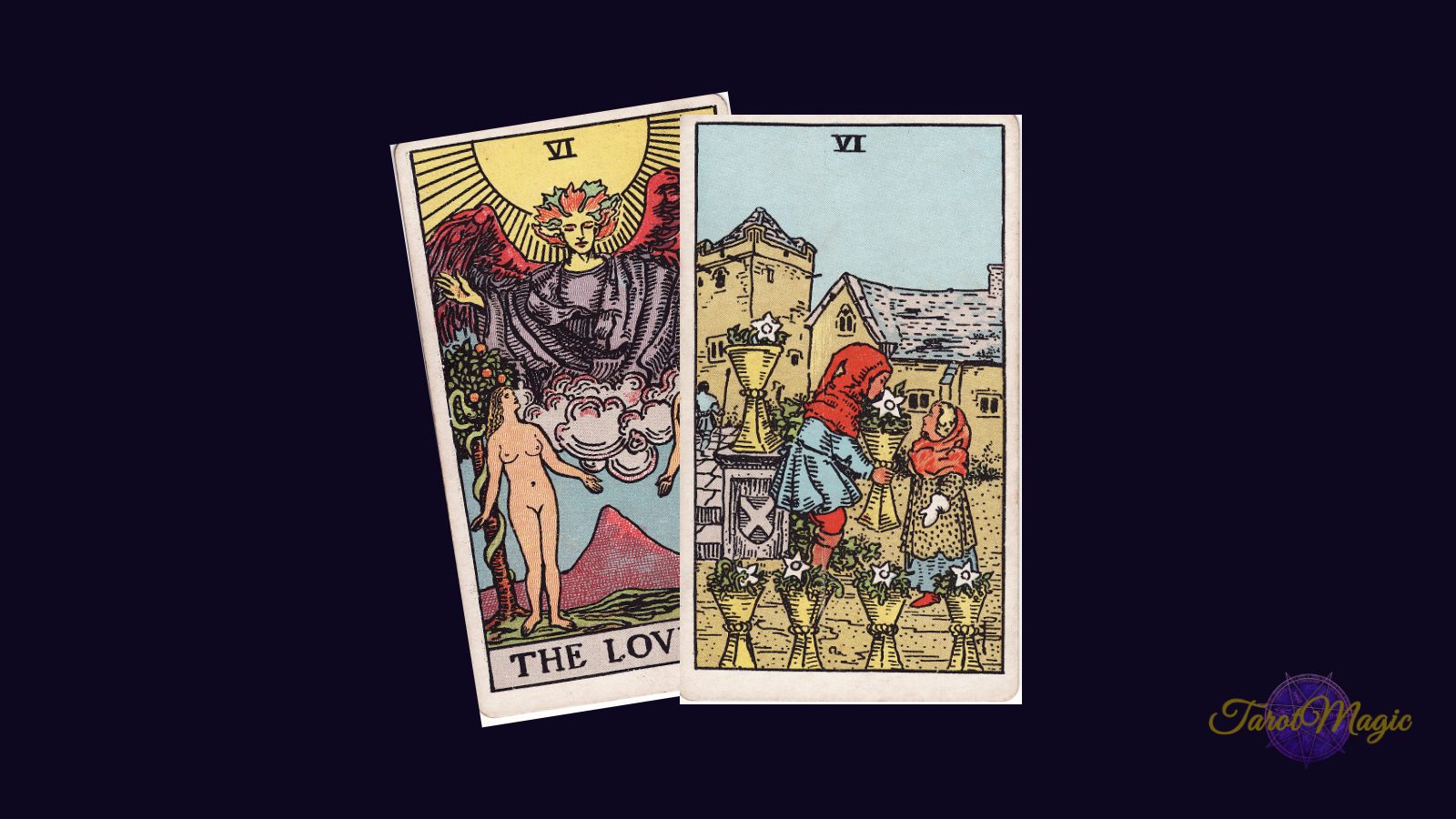
It's 1 a.m. He just liked your story, the first sign of life in two months since the breakup. Your thumbs open a reading on their own and type: "Does he want to come back?"
Stop right there. This is exactly where yes or no love tarot lets people down most often. The cards aren't the problem: the question is about what's going on in someone else's head. We've seen hundreds of these readings, and the pattern never changes. The more a question is about the other person, the foggier the answer. Ask about yourself, and it sharpens right away.
Below: 35 relationship questions that work as yes or no, a worked example and a few questions to skip.
Why "Does He Love Me?" Gets a Fuzzy Answer
How the spread itself works is covered in our lesson Yes or No Tarot: a closed question and one card that leans one way or the other. The lesson also covers "maybe". Here the subject is love.
Feelings don't switch on and off like a light. Today he's annoyed, and by Friday night he's texting "hey, how are you?". A card catches one of those moods, and you get a "yes" that explains nothing. Or a "no" that hurts, even though it only covers one mood.
The second reason is even simpler. A question about yourself, you can answer with action. A question about him leaves you only waiting.
To understand his feelings, a spread of several cards works better, like the one in What Is He Thinking About Me?. The general rules for building a yes or no question on any topic are collected in Yes or No Questions for Tarot.
Before → After: How to Rewrite a Love Question
The recipe is short: shift the focus from him to your move, and add a time frame.
- "Does he love me?" → "Should I tell him how I feel this week?"
- "Will she come back?" → "Is it worth waiting for her reply until the end of the month?"
- "Is he cheating on me?" → "Should I ask him straight out about those messages tonight?"
- "Will we be together?" → "Should I keep investing in this relationship for the next three months?"
- "Will he text me?" → "Should I text him before Sunday if he stays silent?"
Notice? Every question on the right is one you can influence. That's the whole method.
Love Questions That Don't Work as Yes or No
Four kinds of questions trip up the reading again and again.
Questions with "or". "Should I stay with him or leave?" You get a "yes", but yes to which part? Split it in two and ask one.
Questions years ahead. "Will we get married?" One card can't see five years of your life. Take a nearer step: "Should I bring up moving in together with him this fall?"
Questions about a third person. "Does he love her?" That's someone who isn't even part of your story. The card will answer, but the answer won't help you.
Questions for a professional. Pregnancy, a partner's health, divorce and splitting property. These need a doctor or a lawyer: they have information no deck contains.
35 Questions for a Yes or No Love Tarot Reading
Every question is closed and about your move or your readiness. Swap in your own names and dates.
If You're in a Relationship
- Should I tell my partner this week that I need more attention?
- Is it time to suggest moving in together before New Year's?
- Would a vacation without phones help us?
- Should I bring up money tonight?
- Should I forgive that fight and stop bringing it back up?
- Should I introduce him to my parents this winter?
- Do we need a one-month break?
After a Breakup and About an Ex
- Should I reply to his messages this week?
- Should I delete our chat history?
- Is it worth saying yes to a coffee "as friends"?
- Should I return his things in person?
- Should I unfollow him on social media?
- Is it worth giving this relationship one more chance before spring?
- Should I tell our mutual friends why we broke up?
Someone New
- Should I say yes to a second date?
- Should I suggest meeting up this weekend?
- Should I talk about my past relationships this early?
- Is it worth keeping up the chat with someone from a dating app?
- Should I go on the setup my friends are arranging?
- Should I say right away that I'm looking for something serious?
- Should I give a chance to someone I didn't like at first sight?
Texting and Silence
- Should I text him today, even though he's been silent for three days?
- Should I follow up after "read at 11:40 p.m."?
- Should I turn our texting into a phone call this week?
- Should I ask directly what's going on between us?
- Should I stop replying instantly?
- Should I send that long message sitting in my drafts?
- Is it time to stop waiting for a reply and get back to my own life?
Your Move: Text, Confess, Leave
- Should I confess my feelings before the end of the month?
- Should I tell my friend I like him as more than a friend?
- Should I ask her out this week?
- Should I say that I need more time?
- Should I end this relationship before the holidays?
- Should I be the first to apologize, even if we're both to blame?
- Should I talk about the future before six months have passed?
Which Cards Say "Yes" in Love, and Which Say "No"
Every card on our site carries its own answer label. In relationship questions, "yes" most often comes from The Lovers, the Two of Cups, the Ace of Cups and the Ten of Cups. A quiet, shy "yes" comes from the Page of Cups, while the Knight of Cups looks like someone at your door with flowers. The Star belongs here too: a "yes" with hope in it, not a promise.
"No" in love comes through the Three of Swords and the Five of Cups, and also through the Eight of Cups and The Tower. The Moon and the Seven of Swords say "no" as well, and in relationships they often hint that you're not seeing the whole picture.
"Maybe" comes from The Hermit, the Two of Swords, the Six of Cups and The Hanged Man. The lesson covers how to read it.
Example: A Yes or No Love Reading After a Breakup
Megan, 29. She and Jake broke up in August, and in October he liked her photo at 1:12 a.m. Her first question was: "Does he want to come back?"
We rewrote it together: "Should I text Jake myself before Sunday?"
She drew the Six of Cups. Label: "maybe".
Read the meaning, not the label. This card is about memories: a boy handing a girl a cup of flowers. It doesn't say "text him" and it doesn't say "forget him". It shows where the urge to text comes from: nostalgia. Megan misses August at the beach and the people they were back then. Whether she misses the Jake of today is something the card asks rather than answers.
Megan typed a message into her drafts and didn't send it. A week later she reread it and deleted it herself.
If she had drawn the Two of Cups, the conversation would have gone differently: that's a clean "yes" and a step toward each other. But in neither case did the card decide for Megan. It gave her the pause she was missing at 1 a.m.
Honestly: The Cards Don't Decide for Someone Else
The card doesn't know what Jake is thinking. It doesn't look at his phone or see who he's texting. A yes or no reading shows your state and your next step, and that's where its reach ends.
One more thing. No card replaces a conversation. If "is he cheating?" has been spinning in your head for three weeks, a card won't settle it; a conversation will, even an unpleasant one. And if you're being belittled or controlled in the relationship, a deck can't help: talk to people close to you or contact a local support service.
FAQ
Can I ask about love several times a day? One question, one card. A second try ten minutes later usually means you didn't like the first answer. Wait at least a day, or change the step you're asking about.
The card said "no". Is the relationship over? No. A "no" applies to one specific question and one specific time frame. The Eight of Cups in answer to "should I text today?" means "not today". "Never" isn't on the table.
Can I ask about my ex's feelings? You can, but the answer will reflect one of his moods. It's more useful to ask about yourself: "Should I reply to him this week?"
Why do the questions start with "Should I"? Because then you're asking about your own move, and a "yes" or "no" turns into advice you can act on.
Do I need a physical deck? No. An online reading works the same way, and no sign-up is needed. What matters is one honest question.
Pick one question from the list, the most honest one for you right now, and ask it in our Yes or No reading. After that, the decision is yours.
Read next
 What Is He Thinking About Me? An Honest Tarot SpreadSeptember 27, 2026
 Yes or No Questions to Ask Tarot: 50 IdeasOctober 11, 2026
 Tarot Cards for Love: What Each One MeansOctober 4, 2026
Also useful
Readings:
- Reading → — Complete spreads for deep understanding of your situation
- Daily Card → — Discover the energy of today with your daily card
- Yes or No → — Quick answers to simple questions
- Love Tarot → — Three cards about the person on your mind
- One Card → — One card for any question — draw as many times as you like
- Tarot Birth Card → — Find your tarot card by date of birth — three methods
Knowledge:
- Card Meanings → — Complete encyclopedia of all Tarot card meanings
- Journal → — Articles on cards, spreads and tarot practice
- Learn → — A 10-lesson course: from the deck to your first spread