Three of Swords
Keywords
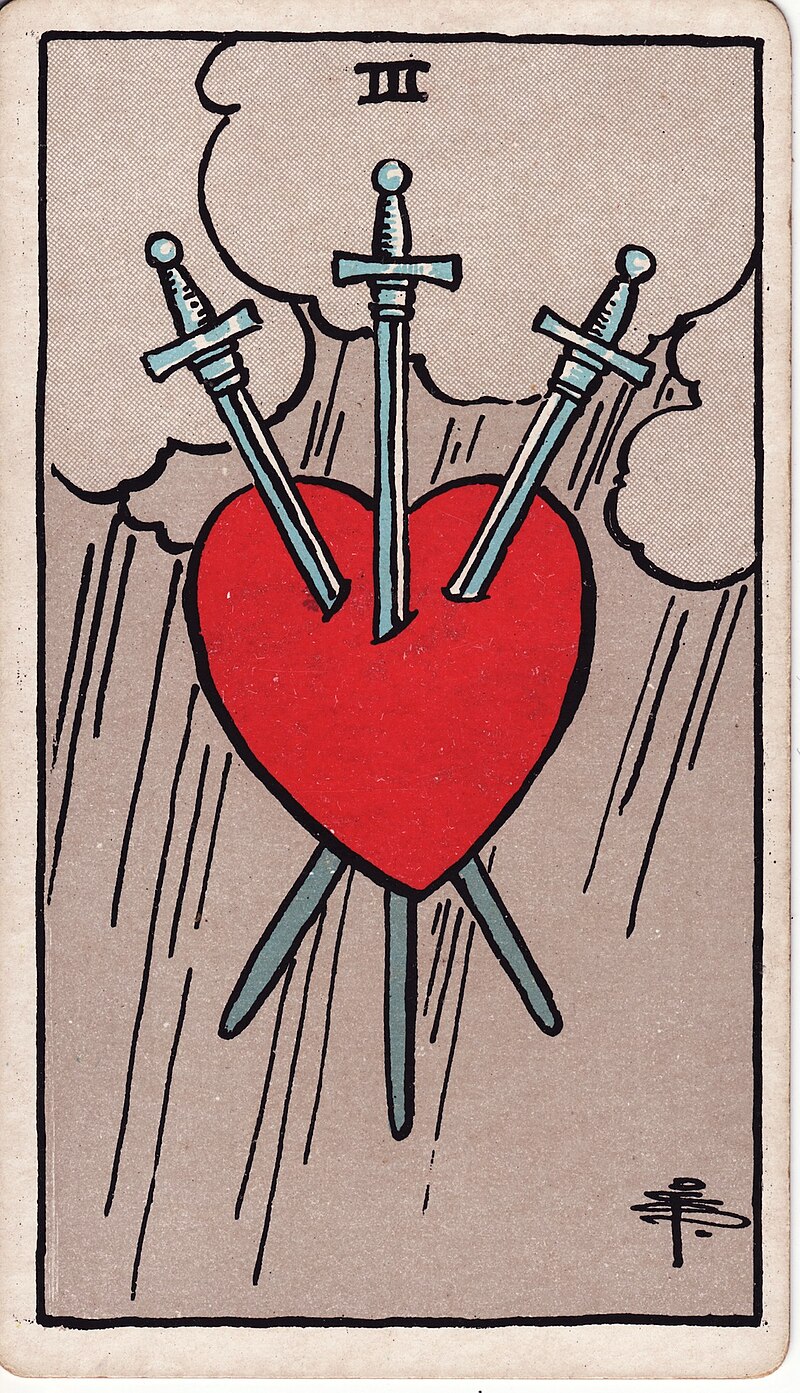
Three sharp blades pierce the heart, embodying the agony of betrayal and severed bonds with cherished souls. This card reveals moments of profound sorrow where words become weapons and trust transforms into deep wounds. The spiritual lesson teaches transmuting suffering into wisdom and discovering strength through acknowledging life's inevitable trials.
- Arcana: Minor
- Element: Air
- Numerology: 3
- Upright: NO
- Reversed: MAYBE
Upright
Grief, pain, betrayal, heartbreak. Emotional pain.
Reversed
Recovery, forgiveness, releasing pain, healing.
Card meaning by area of life
In love and relationships
In relationships, this card speaks of sharp pain from a breakup, betrayal, or deep disappointment. If you're in a partnership, it may signal a serious conflict, deception, or words from your partner that cut deeper than any blade. Trust has been shaken, and honest conversation or time to heal becomes necessary. For those alone, the card points to the sting of recent separation, a wound still raw and fresh. This is a period of mourning lost love, when the heart slowly learns to live with emptiness. Yet remember this truth: the pain you feel now, though it seems endless, will eventually fade.
In work and career
At work, this card warns of conflict, disappointment, or colleagues and superiors letting you down. You may face criticism that stings more than usual, lose an important project, or see business relationships fall apart. In studies, it signals a difficult time—failed exams or fading motivation. The card suggests this isn't the moment for new ventures or major career decisions. Instead, focus on working through current challenges and rebuilding your strength. Often, pain teaches us far more than success ever could.
In finances
In money matters, this card cautions against financial loss, failed investments, or being let down by those close to you. It might mean betrayed trust—money lent to a friend that never returns. Or unexpected expenses that deal a serious blow to your budget. The card advises against impulsive spending during emotional turmoil, as grief often pushes us toward reckless choices. Avoid borrowing or investing hastily. Now is the time for a conservative approach to your finances.
Advice of the card
In this moment, pause and allow yourself to feel the pain rather than run from it through distraction. This difficulty reveals who truly stands with you—suffering has a way of stripping away shallow connections. Write, talk, cry. Let your emotions flow outward instead of holding them in. Reach out to those you trust. Isolation wounds deeper than shared burden ever could. And know this: every profound pain is a trial that forges you stronger. It will pass, leaving you wiser than before.
Reversed position
The reversed card carries a different message—pain is beginning to retreat, wounds are slowly closing. This is a period of healing and restoring your inner peace. You're gradually letting go of hurt, finding within yourself the capacity to forgive, perhaps even yourself. Conflicts resolve, tension eases, and light appears at the tunnel's end. The card signals readiness to move forward, honoring the lessons learned but refusing to be trapped by suffering. This is rebirth after a fall, the moment when hope returns and your strength comes flowing back.
Birth card
Only a Major Arcana card can be your birth card: your date of birth is reduced to a number from 1 to 22, and each number matches one of the 22 Major Arcana. Find yours with the tarot birth card calculator — it works it out three ways.
Is this card a yes or no?
Upright, this card answers NO: it speaks of wounds, betrayal, or rupture—poor soil for a favorable outcome. Circumstances are working against your intention. Reversed, it gives MAYBE, because the pain has begun to fade, but the result depends on whether you've truly let go of the hurt or if the conflict has simply gone dormant. Much hinges on how you phrase the question itself: ask about the outcome of a conflict, and the answer is harsher; ask if you can handle the difficulty, and it softens. You can put your own question to the cards in the Yes or No reading.
Frequently asked questions
What does Three of Swords mean in a tarot reading?
In a spread, this card typically signals that there's unspoken pain or conflict lurking beneath the surface of the situation, coloring everything else—even if your question had nothing to do with feelings. It's telling you not to look away from what wounds you, or the problem will drag on indefinitely. Often it appears where honesty with yourself matters most: admitting that something went wrong before you can move forward.
Is Three of Swords a yes or no card?
The card leans toward a negative answer on its own—it rarely suggests an easy or pleasant outcome. But if your question is framed as 'Can I survive this' or 'Will the pain pass,' the answer can be more hopeful. How precisely you interpret it depends heavily on your wording: the same card answers differently to 'Will it happen' and 'Can I handle it.'
What does Three of Swords reversed mean?
A reversed card doesn't always mean healing is complete—sometimes it's just the beginning, and it's crucial not to confuse genuine forgiveness with rushing to forget pain by burying it deep. Be honest with yourself: have you truly released the hurt, or have you just hidden it until next time? If the inner work was genuine, the card confirms that the hardest phase is behind you and your strength is gradually returning, not all at once.
What does Three of Swords mean in love?
In matters of the heart, this card often comes as a warning: now is not the time for harsh words or blame, because the wound is still too fresh. If a fight has already happened, give it space rather than trying to fix it immediately—raw emotions easily turn into fresh jabs. For those seeking a partner, the card hints that old pain may be quietly influencing new encounters, keeping you from fully trusting.
What does Three of Swords mean for career and money?
In business and money matters, this card often points to damaged reputation, rumors, or sharp criticism that wounds your confidence more than your actual standing. Double-check agreements in writing and don't rely on verbal promises if you sense trust has been shaken. In financial disputes, the card advises against rushing into heated arguments—clear thinking matters now more than the urge to prove yourself right.
Other cards of the Suit of Swords
- Ace of Swords
- Two of Swords
- Four of Swords
- Five of Swords
- Six of Swords
- Seven of Swords
- Eight of Swords
- Nine of Swords
- Ten of Swords
- Page of Swords
- Knight of Swords
- Queen of Swords
- King of Swords
Also useful
Readings:
- Reading → — Complete spreads for deep understanding of your situation
- Daily Card → — Discover the energy of today with your daily card
- Yes or No → — Quick answers to simple questions
- Love Tarot → — Three cards about the person on your mind
- One Card → — One card for any question — draw as many times as you like
- Tarot Birth Card → — Find your tarot card by date of birth — three methods
Knowledge:
- Card Meanings → — Complete encyclopedia of all Tarot card meanings
- Journal → — Articles on cards, spreads and tarot practice
- Learn → — A 10-lesson course: from the deck to your first spread