Tarot Journal
Articles on cards, spreads and practice: how to read Tarot and what the cards mean
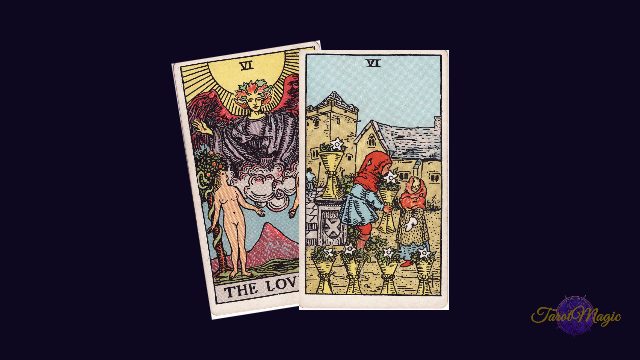 SpreadsYes or No Love Tarot: 35 Questions to AskHow to ask the cards about a relationship so the answer actually means something, and what to ask instead of "Does he love me?"October 18, 2026 · 9 min read
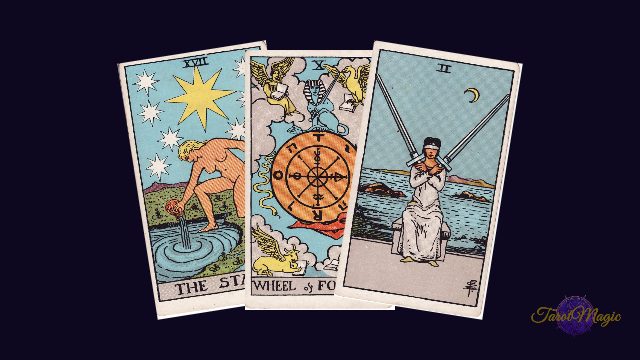 PracticeYes or No Questions to Ask Tarot: 50 IdeasReady-made questions about work, money, moving, family and yourself, plus the ones that never work and how to rewrite themOctober 11, 2026 · 9 min read
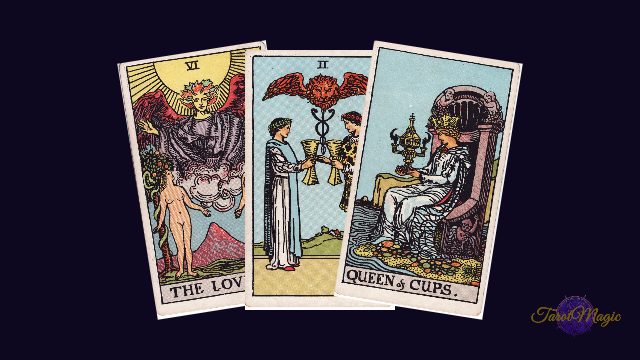 Card meaningsTarot Cards for Love: What Each One MeansThe Lovers, the Two of Cups, the Queen of Cups and the rest: what each card really says about a relationship, and which ones hit the brakesOctober 4, 2026 · 7 min read
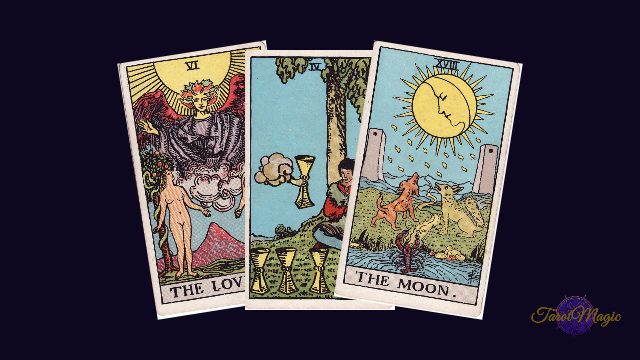 SpreadsWhat Is He Thinking About Me? An Honest Tarot SpreadA 3-card spread, the cards that say "he's thinking of you", "he's hesitating" and "he isn't" — and why the truth may stingSeptember 27, 2026 · 7 min read
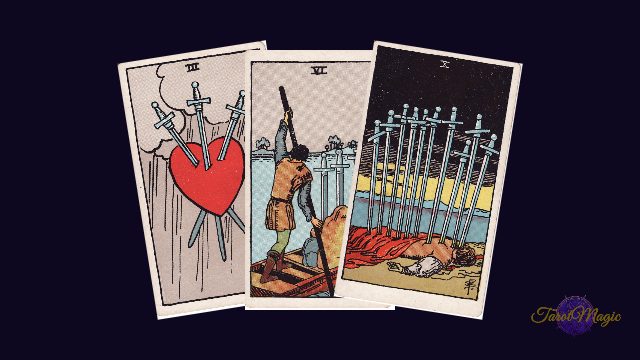 Card meaningsThe Suit of Swords in Tarot: all 14 card meaningsFrom Ace to King: upright and reversed meanings, yes or no answers and tips for your spreadSeptember 20, 2026 · 8 min read
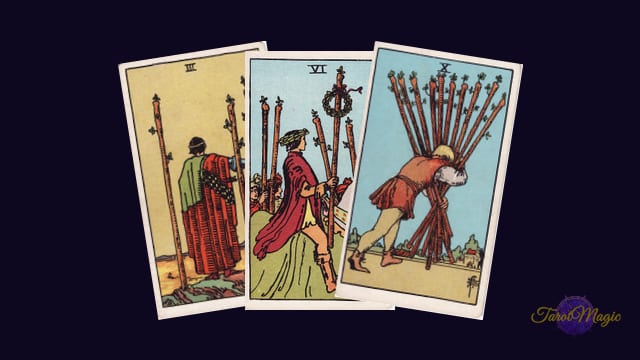 Card meaningsThe Suit of Wands in Tarot: all 14 card meaningsFire, action and the pace of events — how to read Wands in a spread and what sets them apart from the other suitsSeptember 13, 2026 · 6 min read
Questions about the Tarot Journal
What is the Tarot Journal and what is written here?
These are longer pieces on Tarot: whole suits and groups of cards, how spreads are built, reading practice and the basics for beginners. An article gives what a single card entry cannot - the links between cards and the context they are read in.
Where should a beginner start learning Tarot?
With two things at once: the 22 Major Arcana and one card a day. The Majors carry the big themes and stick in memory fastest, while daily practice teaches you to connect a card's image with what actually happened. Bring in the Minor Arcana and the suits as the next step - one suit at a time.
How is a Journal article different from a card page?
A card page answers the question "what does this card mean" - upright and reversed meaning, keywords, a breakdown for love, work and money. An article answers "how does this work" and covers a whole group of cards at once. Individual card meanings are easier to find in Tarot Card Meanings.
How do I read the suits: Wands, Cups, Swords and Pentacles?
Each suit covers its own area of life. Wands are the element of Fire: intention, action, the pace of events. Cups are Water: feelings, relationships, inner state. Swords are Air: thoughts, words, conflicts and decisions. Pentacles are Earth: money, work, the body and everything tangible. If one suit repeats in a spread, that is its main theme.
What languages are the articles published in?
In four: Russian, English, French and Ukrainian. This is not on-the-fly machine translation - each language has its own version of the article and its own address, and the language switcher in the header takes you to the same article rather than back to the section front page.
Do I need to pay or register to read the articles?
No. The Journal is fully open and free, and no account is needed. The subscription on this site applies only to reading interpretations and reading history - it has nothing to do with the articles.
Also useful
Readings:
- Reading → — Complete spreads for deep understanding of your situation
- Daily Card → — Discover the energy of today with your daily card
- Yes or No → — Quick answers to simple questions
- Love Tarot → — Three cards about the person on your mind
- One Card → — One card for any question — draw as many times as you like
- Tarot Birth Card → — Find your tarot card by date of birth — three methods
Knowledge:
- Card Meanings → — Complete encyclopedia of all Tarot card meanings
- Learn → — A 10-lesson course: from the deck to your first spread