The Suit of Swords in Tarot: all 14 card meanings
From Ace to King: upright and reversed meanings, yes or no answers and tips for your spread
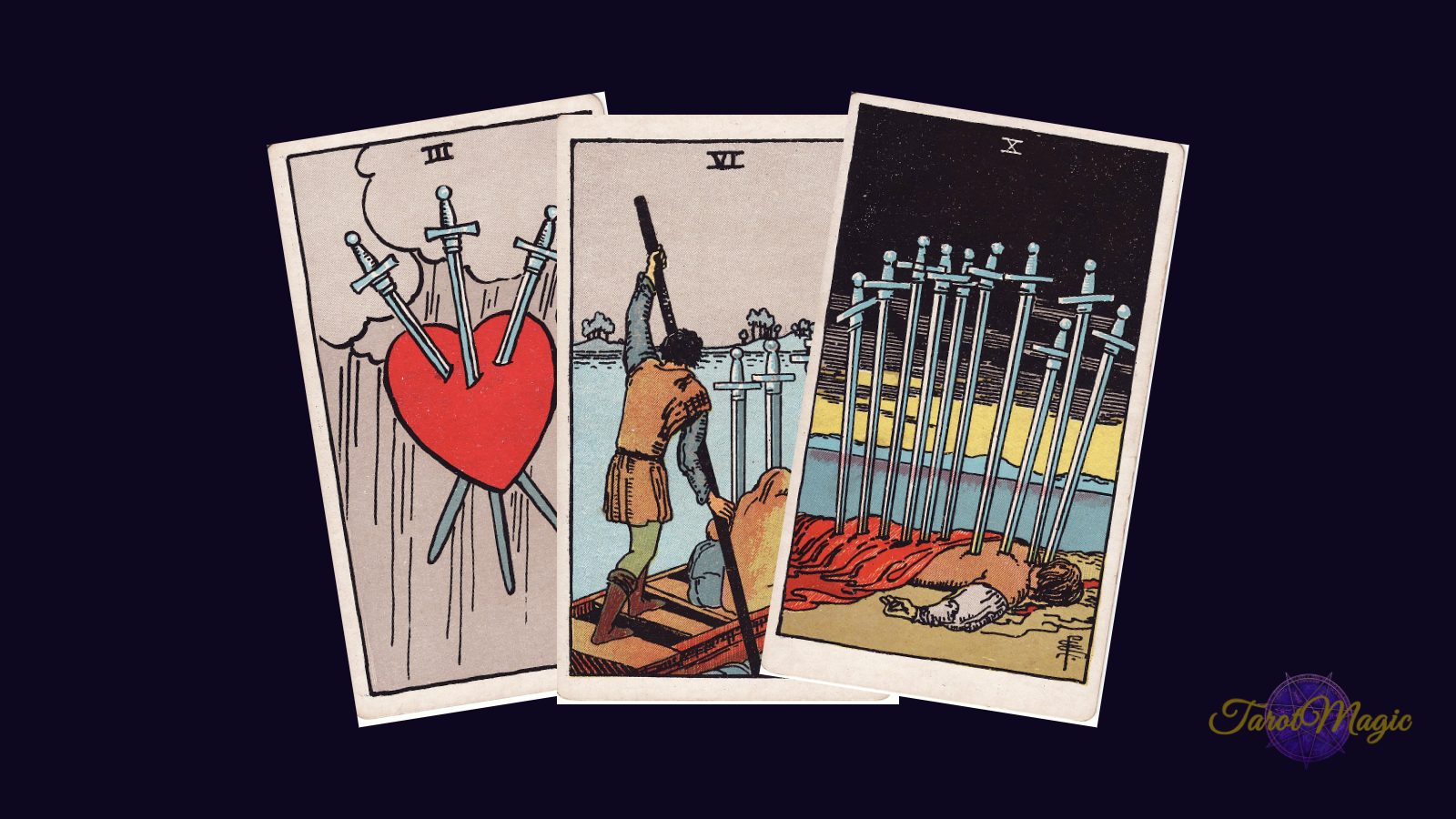
Swords is the most unsettling suit in the deck. A broken heart, swords in a back, a sleepless night, a boat drifting into fog. That is why many people take a Swords card as a bad sign. But Swords are not about fate. They are about what happens in your head: thoughts, words, decisions, and the truth you would rather not admit.
Below you will find the meaning of all 14 Swords cards, upright and reversed, their yes or no answers, and tips for reading this suit in a spread.
What the suit of Swords means
Swords belong to the element of Air. It is the suit of the mind: logic, speech, conflict, truth, choice. If Wands are about action, Cups about feelings, and Pentacles about money and the material world, Swords are about how you think and talk about a situation. For a contrast with the active suit, see our article on the suit of Wands.
The numbered Swords tell a whole story: from a clear idea (Ace) through choice and pain (Two, Three) to rest, conflict, and departure (Four to Six), and then to cunning, entrapment, anxiety, and rock bottom (Seven to Ten). The court cards are four people, or four ways of thinking: the Page, the Knight, the Queen and the King.
One pattern is easy to miss. In the most painful Swords, the reversed position is usually gentler: the reversed Three, Nine and Ten speak of healing, hope and a fresh start. In the "strong" cards, the Knight and the King, reversal means excess: impulsiveness and pressure.
The meaning of all 14 Swords cards
Ace of Swords
A hand from a cloud holds a crowned sword: an image of clarity and breakthrough. Upright: you finally understand what is going on, a new idea arrives, the truth comes out. Reversed: confusion, scattered thoughts, postponed decisions. Yes or no: YES (upright), NO (reversed).
Two of Swords
A blindfolded woman holds two crossed swords. This is a hard choice you keep postponing, not for lack of information, but because you do not want to look at the answer. Reversed: information overload, self-deception, indecision. Yes or no: MAYBE (upright), NO (reversed).
Three of Swords
A heart pierced by three swords against the rain. The card is about pain, betrayal and separation, but it does not invent a problem, it names one. Reversed: healing, forgiveness, letting go of pain. Yes or no: NO (upright), MAYBE (reversed).
Four of Swords
A resting figure and three swords on the wall: an enforced pause. Upright means rest, recovery, time to recharge. It is not death or stagnation, but a breath before the next stage. Reversed: exhaustion, burnout, stagnation. Yes or no: MAYBE (upright), NO (reversed).
Five of Swords
The winner gathers the swords while two others walk away. This is victory at the cost of relationships. Upright: conflict, disrespect, the urge to win at any cost. Reversed: reconciliation, forgiveness, lessons from the argument. Yes or no: NO (upright), MAYBE (reversed).
Six of Swords
A ferryman poles a woman and a child across the water, six swords standing in the boat. It is a passage from trouble to calmer water: change, departure, a journey. The problems travel with you, but the water ahead is quieter. Reversed: resistance to change, being stuck, unresolved issues. Yes or no: YES (upright), NO (reversed).
Seven of Swords
A figure quietly leaves the camp with five of the seven swords. Deception, cunning, actions behind someone's back. Sometimes it is not someone else's trick but your own attempt to get around a hard thing instead of solving it. Reversed: the deception is exposed, a confession. Yes or no: NO (upright), MAYBE (reversed).
Eight of Swords
A blindfolded woman among eight swords, yet the path is open. Restriction, isolation, the feeling of a trap that exists mostly in the mind. Reversed: liberation, taking off the blindfold, new perspectives. Yes or no: NO (upright), MAYBE (reversed).
Nine of Swords
A person sits up in bed, face in their hands. Anxiety, sleeplessness, excessive guilt. The fear often turns out worse than the real situation. Reversed: relief, hope, self-forgiveness. Yes or no: NO (upright), MAYBE (reversed).
Ten of Swords
A person lies face down with ten swords in the back, but there is a sunrise on the horizon. An ending, collapse, rock bottom. The card does not mean death: it says a cycle is over and from here the only way is up. Reversed: recovery, rebirth, a new beginning. Yes or no: NO (upright), MAYBE (reversed).
Page of Swords
A young figure with a sword in the wind. Curiosity, vigilance, new ideas, observation. As a person: inquisitive and still inexperienced; as news: information you should verify. Reversed: gossip, hasty conclusions, talkativeness. Yes or no: MAYBE (upright), NO (reversed).
Knight of Swords
A knight charges on horseback with his sword forward. Speed, ambition, directness, determination. He acts before he has time to think. Reversed: impulsiveness, aggression, haste. Yes or no: YES (upright), NO (reversed).
Queen of Swords
A queen on a throne with a raised sword. Clarity, independence, objectivity: she says it as it is, without decoration. Reversed: coldness, bitterness, vindictiveness. Yes or no: YES (upright), NO (reversed).
King of Swords
A king with his sword pointing upward: judgment, ethics, the authority of the mind. He decides on facts and principles. Reversed: manipulation, harshness, abuse of power. Yes or no: YES (upright), NO (reversed).
Swords: yes or no
In a yes or no reading, Swords rarely give a plain "yes". Of the 14 cards, upright:
- YES: 5 cards: Ace, Six, Knight, Queen, King;
- NO: 6 cards: Three, Five, Seven, Eight, Nine, Ten;
- MAYBE: 3 cards: Two, Four, Page.
| Card | Upright | Reversed |
|---|---|---|
| Ace of Swords | YES | NO |
| Two of Swords | MAYBE | NO |
| Three of Swords | NO | MAYBE |
| Four of Swords | MAYBE | NO |
| Five of Swords | NO | MAYBE |
| Six of Swords | YES | NO |
| Seven of Swords | NO | MAYBE |
| Eight of Swords | NO | MAYBE |
| Nine of Swords | NO | MAYBE |
| Ten of Swords | NO | MAYBE |
| Page of Swords | MAYBE | NO |
| Knight of Swords | YES | NO |
| Queen of Swords | YES | NO |
| King of Swords | YES | NO |
This is a guide, not a verdict: the answer depends on the question and the surrounding cards. Try it yourself: a free yes or no tarot reading.
How to read Swords in a spread
One card or many. A single Swords card usually points to one specific thought or conversation. If a spread is full of Swords, the situation mostly plays out "in the head": analysis, arguments, words rather than actions or feelings.
Numbers. Ace to Three: an idea and the first pain. Four to Six: the way out of a crisis. Seven to Ten: self-deception, anxiety and rock bottom, after which things get easier.
Court cards. The Page is news or a question, the Knight is a fast-moving person or a sharp action, the Queen is a frank and independent person, the King is an authority or a final decision. For more on reading every suit, see the meanings of all 78 cards.
Swords beside other suits.
- with Cups: head against heart;
- with Wands: an idea turning into action;
- with Pentacles: a plan that has to be carried out.
A practical tip. If the Nine or Ten of Swords turns up, ask yourself: what is actually happening here, and what is my mind adding? Often the card shows not the problem, but how you think about it.
Frequently asked questions
Is the suit of Swords bad? No. It is difficult because it deals with truth and the mind. The Nine and Ten look frightening, but reversed they speak of recovery. The Ace, the Queen and the King are strong, "clean" cards.
Does the Ten of Swords mean death? No. It is the end of a cycle, not of a life. The picture shows a sunrise: the worst is behind you.
What does it mean when several Swords appear? The mind is at the center of the situation: a lot of analysis, talk or inner arguments. It helps to stop and separate facts from worries.
Which Swords are the most positive? The Ace, Six, Knight, Queen and King give a "yes" upright. The Four and the Page say "maybe".
Try it yourself
Find out what Swords mean for you: draw your card of the day or do a free 3-card spread with no sign-up.
Read next
 Tarot Cards for Love: What Each One MeansOctober 4, 2026
 The Suit of Wands in Tarot: all 14 card meaningsSeptember 13, 2026
 What Is He Thinking About Me? An Honest Tarot SpreadSeptember 27, 2026
Also useful
Readings:
- Reading — Complete spreads for deep understanding of your situation
- Daily Card — Discover the energy of today with your daily card
- Yes or No — Quick answers to simple questions
- Love Tarot — Three cards about the person on your mind
- One Card — One card for any question — draw as many times as you like
Knowledge:
- Card Meanings — Complete encyclopedia of all Tarot card meanings
- Journal — Articles on cards, spreads and tarot practice
- Learn — A 10-lesson course: from the deck to your first spread