Tarot for Beginners: How the Deck Works
The 78 cards, Major and Minor Arcana, the suits, and how to read a card even when you've forgotten its meaning
Everyone's first reading looks the same. You draw a card, there's a man holding a sword on it, and you have no idea whether that's good news. That's normal. Tarot for beginners gets much easier once you understand how the deck is built before you start memorizing meanings. Nobody remembers 78 meanings in a row, but you can understand the structure of the deck in one evening.
This is the first lesson of a free course. Every later lesson builds on it, so don't skip it even if you already know a few cards.
How many cards are in a tarot deck
A standard deck has 78 cards, split into two unequal parts:
- 22 Major Arcana - named cards numbered 0 to 21;
- 56 Minor Arcana - four suits of 14 cards each.
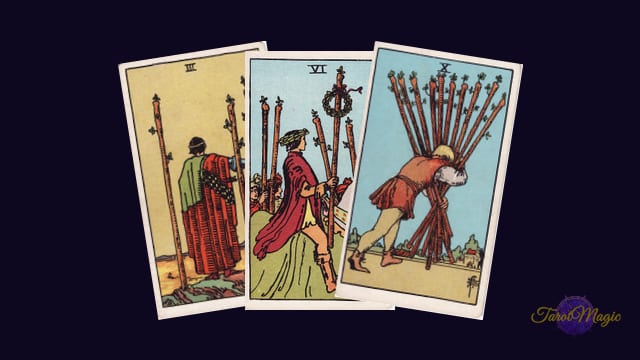
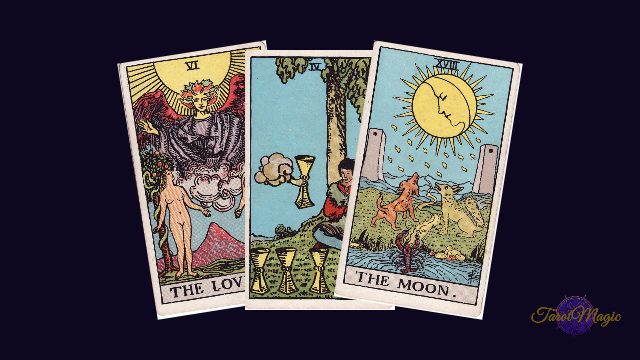
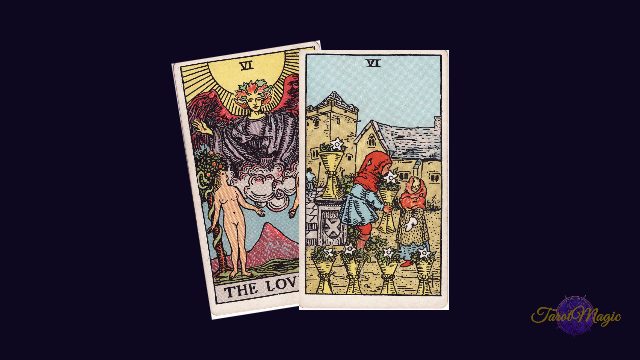
We use the Rider-Waite deck. It was drawn in 1909 and is still the most widely used deck in the world. For a beginner it has one big advantage: even the numbered cards have pictures. On older decks a Six is just six identical sticks, while here it's a scene you can read.
All 78 cards with their meanings are in our tarot card meanings section. Keep it open while you work through the course.
The Major Arcana: big turning points
The Major Arcana run from The Fool (number 0) to The World (number 21). They're about events that change your life for a long time: a big choice, or a crisis after which nothing is quite the same. They're often read as the story of one traveler going through 22 trials.
A simple rule for beginners: if a spread is full of Major Arcana, the situation is bigger than it looks. If there are none, you're dealing with everyday matters. Lesson 2 covers the Major Arcana in full.
The Minor Arcana: ordinary life
The Minor Arcana describe what happens day to day. Each of the four suits has 14 cards: ten numbered cards (Ace to Ten) and four court cards (Page, Knight, Queen, King).
The suit tells you which area of life a card is about:
- Wands - action, energy, ambition, what you do with your hands and willpower;
- Cups - feelings, relationships, love, everything that happens in the heart;
- Swords - thoughts, decisions, arguments, sometimes pain;
- Pentacles - money, work, the body, everything material.
Two suits already have their own guides: the suit of Wands and the suit of Swords.
How to read tarot cards without memorizing
Here's a method that works even when a meaning has slipped your mind. Look at the card and ask yourself two questions.
Which suit? That's the area of life. Which number? That's the stage: the Ace is a beginning, the Three is the first results, the Five is the hard middle, the Ten is the end point, where there's nothing left to do but accept it.
Try it on two cards. Ten of Cups: Cups (feelings) plus Ten (the end point) - feelings that have reached their fullest, a happy family. Three of Swords: Swords (thoughts and words) plus Three (an early stage) - the first pain, caused by words. Open either card's description and you'll find almost the same thing.
This is how to read tarot cards faster than memorizing lists. Tarot cards for beginners aren't 78 separate facts, they're one system of suit and number.
Tarot for beginners: where to start in practice
The most common question is how to learn tarot without owning a deck yet. Start without one. Every morning, draw your card of the day, but don't open the description right away. Look at the suit and the number first, write one sentence about what the card might mean, and only then check.
After a week you'll notice you're guessing right more often. After two, you'll start disagreeing with the description. That's the moment you've started reading the cards instead of remembering them.
Beginner questions
Do I need to buy a deck right away? No. For the first lessons, the card of the day and the meanings section are enough. Buy a deck when you want to lay out cards yourself, and make it a Rider-Waite deck: it has the most learning material written about it.
Is it true you shouldn't buy your own first deck? That's a superstition. Most working tarot readers bought their first deck themselves.
How long does it take to learn the cards? The structure of the deck takes an evening. Most people start reading simple spreads with confidence after a few weeks of daily practice. There's no fixed timeline, everyone is different.
What's next
In lesson 2 we'll go through the 22 Major Arcana in order and see why they're called the Fool's Journey.
Also useful
Readings:
- Reading → — Complete spreads for deep understanding of your situation
- Daily Card → — Discover the energy of today with your daily card
- Yes or No → — Quick answers to simple questions
- Love Tarot → — Three cards about the person on your mind
- One Card → — One card for any question — draw as many times as you like
- Tarot Birth Card → — Find your tarot card by date of birth — three methods
Knowledge:
- Card Meanings → — Complete encyclopedia of all Tarot card meanings
- Journal → — Articles on cards, spreads and tarot practice
- Learn → — A 10-lesson course: from the deck to your first spread